Where Did Jamaicans REALLY Come From? | Jamaican History
Discover the true origins of the Jamaican people! 🌍 From Africa to the Caribbean, this video explores the deep history, ancestry, and cultural roots that shaped Jamaica’s unique identity. Learn about the African tribes, slavery era, and migration stories that built modern Jamaica. If you’ve ever wondered where Jamaicans really come from, this detailed documentary-style breakdown reveals the powerful history behind one of the world’s most influential Caribbean nations. 🇯🇲
ISLAND LIFE & CARIBBEAN CULTURE
Ménesa
11/15/20255 min read
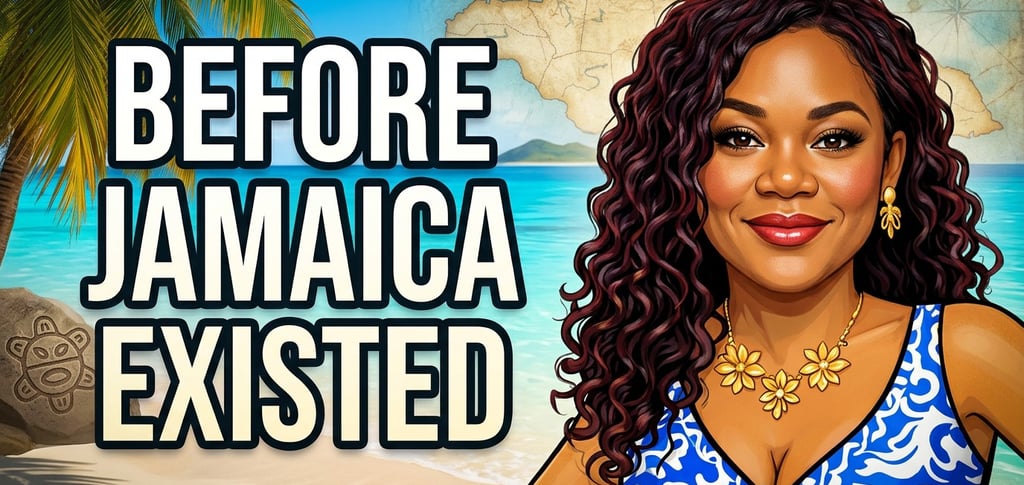
The story of African people in Jamaica is not just about victimhood. It’s a powerful story of resistance.
During the chaos of the English invasion in 1655, many enslaved Africans held by the British escaped into the island’s treacherous mountains. They were joined by others who continued to escape the British plantations for centuries.
Where are Jamaican people really from? I’ve always been fascinated by my own heritage, so I wanted to know where Jamaican people are really from. The story is more complex, more tragic, and more beautiful than most people imagine.
We’re going on a chronological journey to piece together the mosaic that is the modern Jamaican.
Long before any European ship touched its shores, the island we now call Jamaica was known as Xaymaca, the land of wood and water. This name was given by its first inhabitants, the Taíno people. They arrived from the northern coast of South America sometime around 600–650 AD.
The Taíno were part of the larger Arawak-speaking peoples who had spread across the Caribbean. They weren’t wanderers—they were a sophisticated society. They established over 200 villages across the island, especially along the coast and rivers where they could fish.
They were skilled farmers cultivating cassava, sweet potatoes, and corn. They lived in organised communities led by chiefs, and their society was largely peaceful with a deep respect for nature.
In fact, we still use their words today—canoe, hammock, hurricane, and barbecue all come from them.
But this existence was shattered in 1492 with the arrival of Christopher Columbus and the Spanish. Columbus described the Taíno as generous and well-built, but they were tragically unprepared for the brutality that followed.
👇🎁 Click the link below to discover the story of your PATERNAL ancestry. Trace your family line through generations & connect with relatives through the world’s largest Y-DNA database, FamilyTreeDNA.
👇 🎁 Click the link below to discover the story of your MATERNAL ancestry. Trace your family line through generations & connect with relatives through the world’s largest Y-DNA database, FamilyTreeDNA.
The Spanish, hungry for gold and finding none, subjected the Taíno to enslavement, violence, and overwork. Even worse were the diseases they brought—diseases the Taíno had no immunity against. Within decades, the population, once as high as 60,000, was nearly wiped out.
For centuries, the official story was that the Taíno became extinct. But that story is changing.
We now know that some escaped into the rugged Jamaican mountains. Oral traditions, supported by genetic evidence, suggest they encountered and mixed with Africans who were also fighting for freedom in these hills.
Today, a community of around 3,000 self-identified Taíno descendants are reclaiming their heritage, fighting for official recognition, and asserting that they are a living people—not a historical footnote.
The Spanish were the first Europeans to colonise Jamaica, establishing their first settlement in 1509. But for them, Jamaica was a disappointment—the gold they hoped for never existed. For over 150 years, the island served mainly as a supply base for ships heading to more profitable colonies.
It was the Spanish who introduced sugarcane. And as the Taíno population collapsed, they began importing enslaved Africans as early as 1513.
But the Spanish era was only a prelude.
The turning point came in 1655 when an English force, after failing to capture Hispaniola, seized Jamaica. The poorly defended island fell quickly, and the English takeover changed Jamaica’s destiny forever.
Under British rule, Jamaica was transformed into a massive sugar-producing colony—one of the most valuable and brutal in the British Empire. This economy relied entirely on the mass importation of enslaved Africans.
While the English were the dominant European power, they weren’t the only ones shaping the island. Scottish and Irish indentured servants arrived, many escaping poverty or political upheaval at home. Later, in the 1830s, Germans were brought as labourers after slavery ended. Many left quickly, but some remain in Seaford Town, Westmoreland today.
Jewish people also sought refuge in Jamaica, escaping the Spanish Inquisition. Under British rule, they enjoyed religious freedom and became influential in trade.
The British takeover unleashed the full horror of the transatlantic slave trade. Jamaica became one of the largest slave markets in the world. Today, around 90% of Jamaicans are of African descent—an undeniable legacy of this era.
But simply saying “Jamaicans are from Africa” erases the continent’s diversity.
Most enslaved people brought to Jamaica came from two regions:
• The Gold Coast (modern Ghana)
• The Bight of Biafra (modern Nigeria)
British planters favoured the Akan, Ashanti, Igbo, and Yoruba peoples, believing they were more resilient.
These were people from rich ancient cultures, and they carried their heritage with them. This is the bedrock of Jamaican culture.
Jamaican Patois is filled with West African words like nyam (“to eat,” from Twi/Fanti) and unu (“you all,” from Igbo). The folklore character Anansi the Spider comes directly from the Akan people.
And again, the story of African people in Jamaica is not just about suffering—it is a story of resistance.
During the chaos of the English invasion, many enslaved Africans escaped to the mountains. Over time, more joined them. These people became the Maroons.
Drawing on Akan warrior traditions, they built free communities in the interior. For decades, they fought the British to a standstill using brilliant guerrilla tactics.
Led by figures like Queen Nanny, now a Jamaican national hero, the Maroons forced the British to negotiate. In 1739, they signed a peace treaty granting them autonomy.
The Maroons fiercely preserved African traditions, creating a living link to the past that remains strong today.
This history is incredibly layered. The story of the Maroons alone is one of the most powerful examples of resistance in the Americas.
I’d love to hear your traditions in the comments, especially if you live in Jamaica or have Jamaican heritage. Which part of this story has surprised you the most?
Let’s continue.
The abolition of slavery in 1834 created a new crisis for plantation owners. They needed cheap labour, so they turned to indentured servitude—bringing workers from around the world on harsh contracts.
This is when the motto Out of Many, One People begins to take shape.
The largest group of indentured labourers came from India. The first ship arrived in 1845. Between 1845 and 1917, over 36,000 Indians came to Jamaica. Conditions were harsh, but two-thirds stayed and shaped Jamaican culture—food, religion, festivals, and more. Today, Indo-Jamaicans are the largest ethnic minority.
In 1854, the first Chinese immigrants arrived—also indentured labourers. After surviving brutal plantation conditions, many moved into commerce, establishing grocery shops that became the backbone of communities across the island.
The last major group came from the Middle East—mostly Lebanon and Syria—starting in the late 19th century. They arrived fleeing persecution and became prominent business owners. Family names like Issa, Mafood, and Hanna are still influential today.
So where are Jamaican people really from?
The answer is everywhere.
Jamaica begins with the Taíno, who named the island Xaymaca.
It continues through Spanish and British rule.
It is shaped overwhelmingly by Africa—its culture, rhythms, language, and soul.
And it is enriched by Indians, Chinese, Germans, Scots, and Middle Eastern migrants.
Out of many, one people is not a slogan—it is Jamaica’s reality. A complex, painful, beautiful tapestry woven from human journeys across continents.
Thank you for joining me on this journey. If you found this story as fascinating as I do, share this blog so others can learn the incredible story of the Jamaican people and consider downloading your FREE Jamaica Revealed PDF & cheat sheets — and learn more about your history and heritage.
Thank you for reading.

LINKS
Connect & CONNECT
© 2026. All rights reserved. Prosper with Ménesa
Returns & Refund Policy
Island Life Merch Shop US Branch
Island Life Merch Shop UK Branch
SUBSCRIBE TO OUR NEWSLETTER
Subscribe for weekly episodes